
Everything You Need to Know Before You Go
1. Introduction
France travel guide: France is one of the most visited countries in the world, attracting millions of travelers every year with its culture, history, and incredible food.r, it consistently ranks as the most visited country in the world. But what is it about this European jewel that keeps people coming back time and time again?
From the glittering lights of the Eiffel Tower to the sun-drenched vineyards of Bordeaux, from the rugged cliffs of Normandy to the lavender fields of Provence, France offers an astonishing range of experiences for every type of traveler. Whether you are a history buff, a foodie, an art lover, or simply someone seeking a beautiful place to slow down and relax, France has something extraordinary waiting for you.
In this comprehensive travel guide, we cover everything you need to know to plan an unforgettable trip to France — including the best cities to visit, the finest foods to try, the safest travel practices, and practical tips that will make your journey smoother from the moment you land.
Table of Contents
2. Where Is France and Why Visit It?
France is located in Western Europe, bordered by Belgium and Luxembourg to the north, Germany and Switzerland to the east, Italy and Monaco to the southeast, and Spain and Andorra to the south. To the west, its Atlantic coastline stretches for hundreds of kilometers, while the French Riviera in the south hugs the warm waters of the Mediterranean Sea.
This central European position has made France a cultural and commercial crossroads for centuries, influencing — and being influenced by — the great civilizations of Europe. Today, that rich heritage is visible everywhere: in its magnificent Gothic cathedrals, its ornate royal palaces, its Impressionist paintings, and its centuries-old culinary traditions.
Why should you visit France? Here are just a few compelling reasons:
-Culture and History: France is home to more UNESCO World Heritage Sites than almost any other country, including Versailles, the banks of the Seine, and the prehistoric caves of the Vézère Valley.
-Food and Wine: French cuisine is recognized by UNESCO as an Intangible Cultural Heritage of Humanity. From Michelin-starred restaurants to humble roadside boulangeries, eating in France is an experience in itself.
-Architecture: Paris alone boasts some of the world’s most iconic structures — the Eiffel Tower, Notre-Dame Cathedral, and the Louvre. Beyond the capital, medieval châteaux and Roman amphitheaters dot the countryside.
-Diverse Landscapes: France offers beach resorts, mountain ski slopes, river valleys, volcanic plateaus, and rolling wine country — all within a single country.
-Fashion and Art: As the global capital of fashion and a cornerstone of the art world, France has given us Monet, Picasso (by adoption), Chanel, and the Cannes Film Festival.
3. Best Cities to Visit in France
France is a country of distinct regions, each with its own personality, dialect, and flavor. Here are the cities that should be at the top of your travel list.
Paris
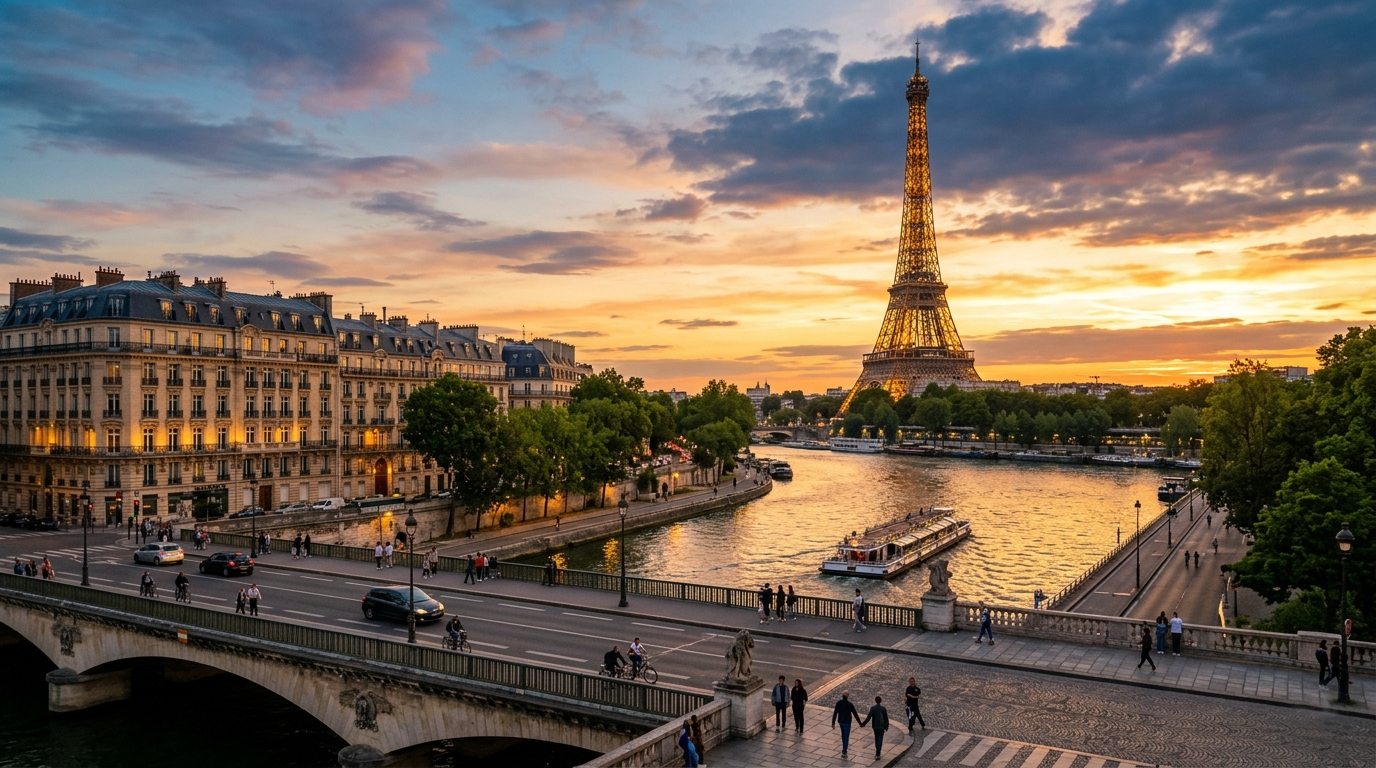
No travel guide to France would be complete without Paris. The City of Light is arguably the most romanticized city in the world, and it absolutely lives up to the hype. Stroll along the Seine, visit the Eiffel Tower at sunset, explore the world’s greatest art collection at the Louvre, and lose yourself in the charming cobblestone streets of Montmartre. Paris is also a shopper’s paradise, a theater lover’s dream, and home to some of the finest restaurants on earth.
Nice
Nestled along the French Riviera, Nice is where the mountains meet the Mediterranean. The city’s famous Promenade des Anglais curves elegantly along the turquoise sea, while the vibrant Old Town (Vieux-Nice) is a maze of baroque architecture, colorful markets, and Niçoise specialties like salade niçoise and socca flatbread. Nice is also an ideal base for day trips to Monaco, Cannes, and the hilltop villages of the Côte d’Azur.
Lyon
Often overshadowed by Paris, Lyon is France’s culinary capital and a city that deeply rewards those who seek it out. Its Old Town (Vieux-Lyon) is a UNESCO World Heritage Site, with Renaissance-era traboules (hidden passageways) connecting courtyards and streets. Lyon’s bouchons — small, traditional bistros — serve rich, hearty Lyonnaise cooking that has made the city legendary among food lovers.
Marseille
France’s oldest city and its largest port, Marseille is a vibrant, multicultural metropolis with a raw energy that sets it apart from anywhere else in the country. The iconic Vieux-Port (Old Port) buzzes with fishing boats and outdoor cafés. The dramatic Calanques — a series of stunning limestone fjords — lie just minutes from the city center and offer world-class hiking and snorkeling.
Bordeaux
Bordeaux is synonymous with wine, and for good reason — it sits at the heart of one of the world’s greatest wine-producing regions. But the city is far more than just a wine destination. Its 18th-century neoclassical architecture earned it UNESCO recognition, and its Place de la Bourse mirrored in the famous Water Mirror (Miroir d’eau) is one of the most photographed spots in France.
Strasbourg
Located on the border with Germany, Strasbourg is a unique fusion of French and Germanic cultures. Its stunning Gothic cathedral towers over a beautifully preserved medieval old town (the Grande Île, a UNESCO World Heritage Site), and the famous Petite France district — with its half-timbered houses reflected in the canals — looks like it stepped straight out of a fairy tale.
4. Best Time to Visit France
Spring (April to June)
Spring is widely considered the best time to visit France. The weather is mild and pleasant, the countryside bursts into bloom, and the summer crowds have not yet arrived. Paris in April and May is particularly magical, with chestnut trees in blossom and café terraces filling up with locals. Expect some rain, especially in the north, but temperatures are comfortable for sightseeing.
Summer (July to August)
Summer is the peak tourist season in France. The French Riviera, Loire Valley, and Provence are at their absolute most beautiful — and their most crowded. Prices for accommodation spike, and popular attractions can have long queues. That said, summer is also festival season, with events like the Avignon Theatre Festival, Bastille Day celebrations on July 14th, and the Tour de France cycling race bringing the country to life.
Autumn (September to November)
Autumn is a wonderful and often underrated time to visit France. Temperatures remain warm well into October, the harvest season is in full swing in wine country, and the tourist crowds thin out considerably. The Dordogne, Alsace, and the Loire Valley are particularly beautiful in autumn foliage. It is also a great time for food festivals and truffle markets.
Winter (December to March)
Winter in France brings Christmas markets, ski resorts, and a quieter, more local atmosphere in the major cities. The French Alps and Pyrenees are world-class ski destinations, while Strasbourg’s Christmas market is among the finest in Europe. Paris in winter is chilly but undeniably atmospheric, with far fewer tourists and shorter lines at museums. Avoid traveling during the French school holidays in February if you want to avoid domestic crowds.
In this France travel guide, we recommend visiting during spring or autumn for the best weather and fewer crowds.
5. Is France Safe for Tourists?
France is generally a safe country for tourists. The vast majority of visitors have trouble-free trips and leave with wonderful memories. However, like any major travel destination, it is important to stay aware of your surroundings and take basic precautions.
The most common issue faced by tourists in France is petty theft, particularly in high-traffic areas such as:
-The Eiffel Tower and its surrounding park
-The Paris Métro, especially on busy lines
-Popular museums and tourist landmarks
-Train stations and airports
Pickpockets often work in groups and can be very skilled. Keep your valuables in a money belt or front pocket, be wary of strangers who approach you with distractions or petitions, and keep your bags zipped and in front of you in crowded areas.
France has elevated its security presence significantly in recent years, and you will notice armed police and military personnel at major tourist sites. Emergency services are reliable and efficient. The national emergency number is 112. Overall, France remains a very welcoming and safe destination for international travelers.
Before traveling, it’s also useful to check the best apps for staying safe while traveling alone.
6. Top Things to Do in France
-Visit the Eiffel Tower: No trip to France is complete without seeing this iconic iron lattice structure. Visit at dusk to watch it sparkle with lights at the top of every hour after dark.
-Explore the Louvre Museum: Home to the Mona Lisa and the Venus de Milo, the Louvre is the world’s most visited art museum. Pre-book your tickets to skip the queues.
-Walk Along the Seine River: A leisurely stroll along the banks of the Seine is one of Paris’s great pleasures. Cross the Pont des Arts, admire Notre-Dame, and explore the Île Saint-Louis.
-Visit the French Riviera: Relax on the glamorous beaches of Nice, Antibes, or Saint-Tropez, and rub shoulders with the jet set in the Principality of Monaco.
-Explore the Châteaux of the Loire Valley: The Loire Valley contains over 300 castles and is often called the ‘Garden of France.’ Château de Chambord and Château de Chenonceau are unmissable.
-Wine Tasting in Bordeaux: Join a guided tour of the legendary vineyards of Saint-Émilion, Pauillac, or Médoc and discover why French wine is the benchmark of the world.
-Visit Mont Saint-Michel: This medieval abbey perched on a tidal island off the Normandy coast is one of France’s most breathtaking and otherworldly sights. Visit at high tide if you can.
7. French Food Every Traveler Should Try
France’s culinary heritage is one of its greatest gifts to the world. Here are the dishes and drinks you absolutely must try during your visit:
Croissants: A freshly baked, buttery croissant from a proper boulangerie is a near-religious experience. Eat it plain or with a café au lait for the ultimate French breakfast.
Baguettes: The long, crispy baguette is the edible symbol of France. Buy one from a bakery and eat it on a park bench like a true local.
Escargots: Snails baked in garlic butter and parsley are a French classic. Try them at a traditional brasserie and put your culinary adventurousness to the test.
Ratatouille: This slow-cooked Provençal vegetable stew is a masterpiece of simplicity — a riot of tomatoes, zucchini, eggplant, and herbs from southern France.
French Cheese: France produces over 1,000 varieties of cheese. Start with Brie de Meaux, Camembert de Normandie, Comté, and Roquefort.
French Wine: From Champagne in the north to Châteauneuf-du-Pape in Provence, France produces some of the world’s most celebrated wines. Every region has its specialty.
8. Travel Tips for Visiting France
Getting Around
France has one of the best transportation networks in Europe. The TGV high-speed train connects major cities with impressive efficiency — Paris to Lyon takes just two hours. Within cities, public transport (Métro, trams, and buses) is clean, frequent, and affordable. Renting a car is ideal for exploring the countryside and wine regions.
Cultural Etiquette
French culture places great value on politeness and formality. Always greet shopkeepers and restaurant staff with a ‘Bonjour’ (good morning/afternoon) and say ‘Au revoir’ when you leave. Attempting even a few words of French will be warmly appreciated and will often make locals much more friendly and helpful.
Tipping
Tipping is not obligatory in France, as service charges are included in restaurant bills by law. However, it is common to round up the bill or leave a few euros as a gesture of appreciation for good service. For taxis, rounding up to the nearest euro is customary.
Language Tips
French is the official language, and while English is widely spoken in tourist areas, Paris hotels, and major attractions, it is less common in rural areas. Learning a few basic French phrases — ‘S’il vous plaît’ (please), ‘Merci’ (thank you), ‘Excusez-moi’ (excuse me) — will go a long way.
Frequently Asked Questions About Traveling to France
Is France safe for tourists?
Yes, France is generally safe for tourists. Exercise standard caution against pickpocketing in busy tourist areas, and be aware of your surroundings in crowded spaces. The emergency number is 112.
Do tourists need a visa to visit France?
Citizens of the European Union and many other countries, including the USA, Canada, Australia, and the UK, do not need a visa for stays of up to 90 days. However, Travelers should check the latest ETIAS requirements before departure, as implementation dates may change.
(European Travel Information and Authorization System) before arriving. Check the requirements for your specific nationality before traveling.
Is France expensive for travelers?
France can be expensive, particularly in Paris, the French Riviera, and ski resorts. However, with careful planning, it is possible to travel affordably. Markets, boulangeries, and neighborhood restaurants offer excellent value. Outside the capital, accommodation and food become significantly cheaper.
What currency is used in France?
France uses the Euro (EUR, €). Credit cards are widely accepted, though some smaller cafés, markets, and rural businesses may prefer cash. ATMs are widely available throughout the country.
Do people speak English in France?
English is widely spoken in Paris, major cities, and tourist attractions. In smaller towns and rural areas, French is predominantly spoken. A basic knowledge of French phrases will enhance your experience significantly.
We hope this France travel guide helps you plan an amazing trip across one of the most beautiful countries in Europe.
Conclusion: Why France Belongs on Your Bucket List
France is not just a destination — it is an experience that stays with you long after you have returned home. It is the taste of a warm croissant on a misty Paris morning. It is the golden light falling over the vineyards of Burgundy at harvest time. It is the awe you feel standing before a Gothic cathedral that has watched eight centuries pass. It is a conversation with a friendly stranger at a Provençal market who insists you try the local olive oil.
Few countries can match France for the sheer breadth and depth of what it offers travelers. Whether you have two days or two months, a small budget or an unlimited one, France will reward you in ways you could not have anticipated. It demands to be explored slowly, tasted carefully, and revisited often.
So start planning, dust off your French phrasebook, and get ready to fall in love with La Belle France. Bonne chance et bon voyage — good luck and happy travels!
This travel guide is intended for informational purposes. Always check current visa requirements,
travel advisories, and entry regulations before booking your trip.
